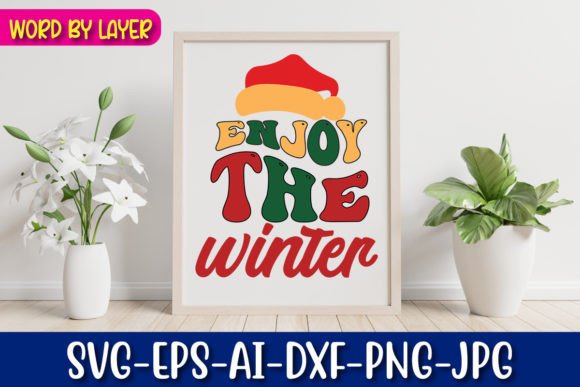
Enjoy the Winter Retro Christmas Design
As a designer who spends more time staring at stitch density charts and fabric swatches than actually sleeping, I have developed a rather cynical eye for holiday graphics. The market is flooded with generic snowflakes and overly aggressive red-and-green color palettes that scream "discount bin." However, when I first pulled up Enjoy the Winter Retro Christmas Design, I paused. It didn’t feel like just another clip-art dump; it felt like a mood board come to life. This isn't just a graphic; it is a machine embroidery design candidate that understands the nuance of vintage aesthetics while maintaining the structural integrity required for real-world stitching.
I evaluate designs not by how they look on a screen, but by how they behave under the needle. For this review, I am looking at this as a potential asset for my own small business inventory—specifically for custom apparel and personalized gifts—and assessing its viability for other crafters, Etsy sellers, and handmade shop owners who need reliable design assets that convert views into sales.
The First Impression: Mood and Visual Personality
The term "retro" is thrown around loosely in the Crafts category, often resulting in designs that are muddy or hard to read when scaled down. What stands out about Enjoy the Winter Retro Christmas Design is its clarity. The visual personality leans heavily into nostalgic warmth without becoming cluttered. It evokes the feeling of a cozy cabin, perhaps a worn-out wool sweater or a vintage tin sign found in an antique store. This emotional resonance is critical for holiday embroidery because buyers are purchasing nostalgia as much as they are purchasing a physical item.
In terms of layout, the design feels balanced. It doesn’t fight for attention with unnecessary flourishes. This simplicity is a designer’s best friend. When translating a digital file into a physical object, every extra pixel is a potential point of failure. By keeping the core elements distinct, this design ensures that the final embroidery project remains legible even from a distance. It creates an immediate connection with the viewer, suggesting comfort and tradition, which are key drivers for seasonal merchandise.
Real-World Application: Where Does It Shine?
To truly test a design, you have to take it out of the virtual studio and put it on actual products. My primary use case for Enjoy the Winter Retro Christmas Design would be custom sweatshirts and tote bags. These items provide a stable canvas that allows the design’s character to breathe. Imagine a heather grey crewneck sweatshirt featuring this retro motif stitched in muted creams and deep forest greens. The contrast would be striking yet sophisticated, appealing to customers who want festive wear that doesn’t look like a costume.
For Etsy sellers and small shop product creators, versatility is money. This design also translates beautifully to baby clothes and nursery decor. The softer, vintage vibe makes it appropriate for infant bodysuits or crib bumpers where bold, modern graphics might feel too harsh. Furthermore, it works exceptionally well as an embroidered patch for denim jackets or backpacks, adding a touch of personalized flair to everyday carry items. If you are looking to expand your line into home goods, consider pillow covers or kitchen towels. The design’s structure likely holds up well on cotton blends, offering a charming accent piece for holiday hosting.
However, success depends on execution. A great digital embroidery file is only half the battle; the other half is material selection. Using this on a high-quality fleece or sturdy canvas will yield a professional result. On cheap, thin polyester, the design might pucker or lose definition. Always remember that the perceived value of your handmade product is directly tied to the quality of both the fabric and the stitching.
Technical Considerations and Potential Pitfalls
No design is perfect for every scenario, and honest reviews must address limitations. While Enjoy the Winter Retro Christmas Design appears robust, there are specific areas where caution is advised. First, consider the hoop size. If you attempt to digitize or stitch this on a very small hoop, you risk losing the subtleties of the retro detailing. Ensure your machine can accommodate the full scale of the design without requiring excessive trimming or re-hooping, which can lead to alignment issues.
Fabric texture is another critical factor. Textured fabrics, such as heavy tweeds or looped knits, can obscure fine details. If your design relies on delicate lines or small text, these surfaces may cause the stitches to blend together, resulting in a muddy appearance. Similarly, stretchy fabrics require careful stabilization. Without proper support, the tension of the thread can distort the fabric, warping the design’s shape. In these cases, using a cut-away stabilizer is non-negotiable to maintain the integrity of the finished product.
Dark fabrics present their own challenges. High contrast is essential for readability. If you choose a dark background, ensure the thread colors selected provide enough separation from the fabric. A light cream thread on black might work, but a pastel pink could disappear entirely. Always test thread combinations before committing to a bulk run. Additionally, be mindful of dense stitch areas. If the design includes large blocks of fill stitch, verify that the stitch density is appropriate for your fabric weight to prevent stiffness or breakage.
Practical Designer Notes for Execution
Before you upload this file to your production queue, follow these practical steps to ensure professional results:
- Test on Scrap Fabric: Never assume a design will stitch perfectly on the first try. Run a sample on the exact fabric you plan to use. This reveals issues with puckering, tension, or thread breaks early.
- Check Thread Color Contrast: Evaluate your chosen thread colors against the fabric in natural light. Digital screens can deceive you regarding brightness and saturation.
- Review Stitch Density: Inspect the file for any overly dense areas that might overwhelm the fabric or cause needle breakage. Adjust if necessary.
- Confirm Hoop Size: Ensure your embroidery machine’s maximum hoop size can accommodate the design dimensions without cropping important elements.
- Inspect Small Details: Zoom in on the vector layers. Are the tiny curves smooth? Will they stitch cleanly, or do they need simplification?
- Test Black and White Mockups: Convert your design to grayscale to check for balance and contrast independent of color bias.
- Verify Licensing: Crucially, confirm whether the license allows for commercial use. If you are selling finished items, you must have the right to do so. Check the Digital download cut file no physical products terms carefully.
Final Verdict on Value and Appeal
Ultimately, Enjoy the Winter Retro Christmas Design offers strong visual appeal and practical utility for designers who value authenticity over flashiness. It enhances brand consistency for shops aiming for a cozy, artisanal aesthetic. Customers respond well to designs that feel curated and thoughtful, and this retro theme delivers exactly that. It boosts buyer engagement by tapping into universal feelings of warmth and celebration.
Whether you are creating a personalized gift for a loved one or building a catalog of commercial embroidery items for your online store, this design provides a solid foundation. It respects the technical constraints of embroidery while maximizing creative expression. By paying attention to fabric choice, stabilization, and thread selection, you can transform this digital asset into a tangible, high-value handmade product that stands out in a crowded marketplace. For anyone serious about their craft business, investing time in testing and refining designs like this one is what separates amateur projects from professional successes.