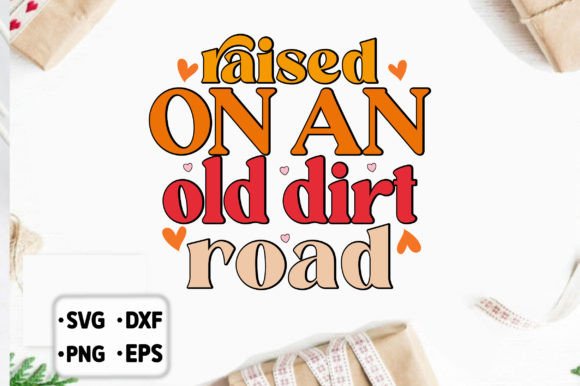
Retro Raised on an Old Dirt Road
There is a specific kind of nostalgia that only Southern embroidery captures perfectly. It feels warm, slightly weathered, and undeniably authentic. When I first encountered the Retro Raised on an Old Dirt Road design, I didn't just see a graphic; I saw a project waiting to happen. As someone who has spent years evaluating digital assets for real-world stitching, I know that the difference between a good file and a great one lies in how it translates from screen to fabric. This piece fits squarely into the Crafts and Graphics categories, but its true value shines when applied to actual handmade products.
The first impression of Retro Raised on an Old Dirt Road is one of rugged charm. The typography suggests a vintage road sign or a faded bumper sticker, evoking memories of summer drives and quiet country evenings. For an embroidery designer, this mood is crucial. It dictates not just where the design goes, but how it should be stitched. Unlike a modern, geometric vector that demands crisp lines and perfect symmetry, this design invites texture. It asks for thread that might have a slight sheen or a matte finish that mimics worn paint. It feels like it belongs on something you would wear while working in a garden or driving an old truck, rather than something stiff and formal.
I recently put this design to the test with a practical scenario: creating a custom embroidered tote bag for a local boutique owner. She wanted something that screamed "Southern hospitality" without being cliché. We chose a heavy canvas tote in natural oatmeal color. The challenge was ensuring the stitch density held up against the rough texture of the canvas while maintaining the retro aesthetic. Because Retro Raised on an Old Dirt Road features bold lettering with implied depth, we opted for a satin stitch for the main text to give it that raised, tactile feel, and used a running stitch for any fine details to soften the look. The result was stunning. The design didn't fight the fabric; it embraced the weave, looking as if it had been there since day one.
However, not every application is as straightforward as a sturdy tote. When evaluating this file for other projects, such as sweatshirt embroidery or apparel decorations, you need to be mindful of the garment's surface area. On a large sweatshirt back, the design commands attention. But on smaller items like a baby onesie or a cap, the scale becomes critical. If the original artwork contains intricate corners or tiny decorative elements, they can get lost in the hoop. I always advise checking the hoop size compatibility before committing to a small batch production run. A design that looks expansive on a screen might feel cramped on a 4x4 inch patch.
For those of you selling finished goods on Etsy or at craft fairs, the visual appeal of your product often hinges on these subtle details. Customers trust designs that look professionally executed. If the fill stitch areas are too dense, the fabric will pucker, ruining the professional look of a handmade product. Conversely, if the density is too low, the underlying fabric shows through, making the item look cheap. With Retro Raised on an Old Dirt Road, the key is balancing the retro vibe with structural integrity. It works beautifully for commercial embroidery projects like branded aprons for coffee shops or kitchen towels for holiday gifts, provided the thread colors are chosen carefully to contrast well against the background fabric.
One area where caution is required involves textured fabrics. While the design pairs wonderfully with denim or canvas, applying it to thin, stretchy knits requires extra stabilization. Without a proper stabilizer, the tension of the stitches can distort the fabric, causing the "Old Dirt Road" theme to look warped rather than nostalgic. Similarly, dark fabrics present a unique challenge. To make the retro elements pop, you might need to use a lighter thread color or add a light underlay. This adds time to the production process, so factor that into your pricing if you are running a small shop product line.
The versatility of this design extends beyond clothing. I have seen embroidered patches featuring similar motifs become best-sellers for outdoor enthusiasts. The rugged nature of Retro Raised on an Old Dirt Road makes it ideal for gear bags, backpacks, and even pillow covers for rustic-themed nurseries. It bridges the gap between a simple personalized gift and a statement piece of decor. When designing a mockup for a client, placing this graphic on a neutral background immediately elevates the perceived value of the item. It signals quality and thoughtfulness, which are essential traits for Etsy sellers and creative entrepreneurs.
Before you download and start stitching, there are a few technical notes to consider. While the product description highlights that the illustrations received are of higher quality than presentation images, it does not specify exact file formats or machine compatibility. You must verify whether the file is optimized for your specific embroidery machine. Is it a standard PES, DST, or JEF format? Does it require a specific stabilizer type? These details are vital for a smooth workflow. Additionally, confirm the licensing terms. Are you allowed to sell finished items made from this design? Most commercial users need explicit permission to turn a digital file into a revenue-generating product.
If you are planning to use this for printable mockups or digital previews, remember that the final look depends heavily on the thread selection. A monochromatic version might look sleek and modern, while a multi-color palette could lean more towards a classic Americana style. Test the design on scrap fabric first to see how the running stitch interacts with your chosen material. Check the thread colors under different lighting conditions to ensure the contrast remains high. A design that looks great in bright studio light might disappear on a customer's shelf in dimmer store lighting.
In the world of craft business and design assets, reliability is everything. You want a file that behaves predictably. Retro Raised on an Old Dirt Road offers a strong foundation for this. Its layout is balanced, and the retro theme is timeless enough to remain relevant season after season. Whether you are creating holiday embroidery collections, wedding favors, or boutique branding materials, this design provides a solid starting point. It allows you to inject personality into your work without needing to spend hours tweaking vectors.
Ultimately, the success of a design like this comes down to execution. It is not just about having the right file; it is about understanding the medium. By treating Retro Raised on an Old Dirt Road with the respect it deserves—choosing the right fabric, stabilizing properly, and selecting complementary threads—you can create finished products that customers will love. It transforms a simple digital image into a tangible memory, stitched into a shirt, a bag, or a home accessory. For designers looking to expand their portfolio with authentic, character-driven graphics, this is a valuable addition to your toolkit.